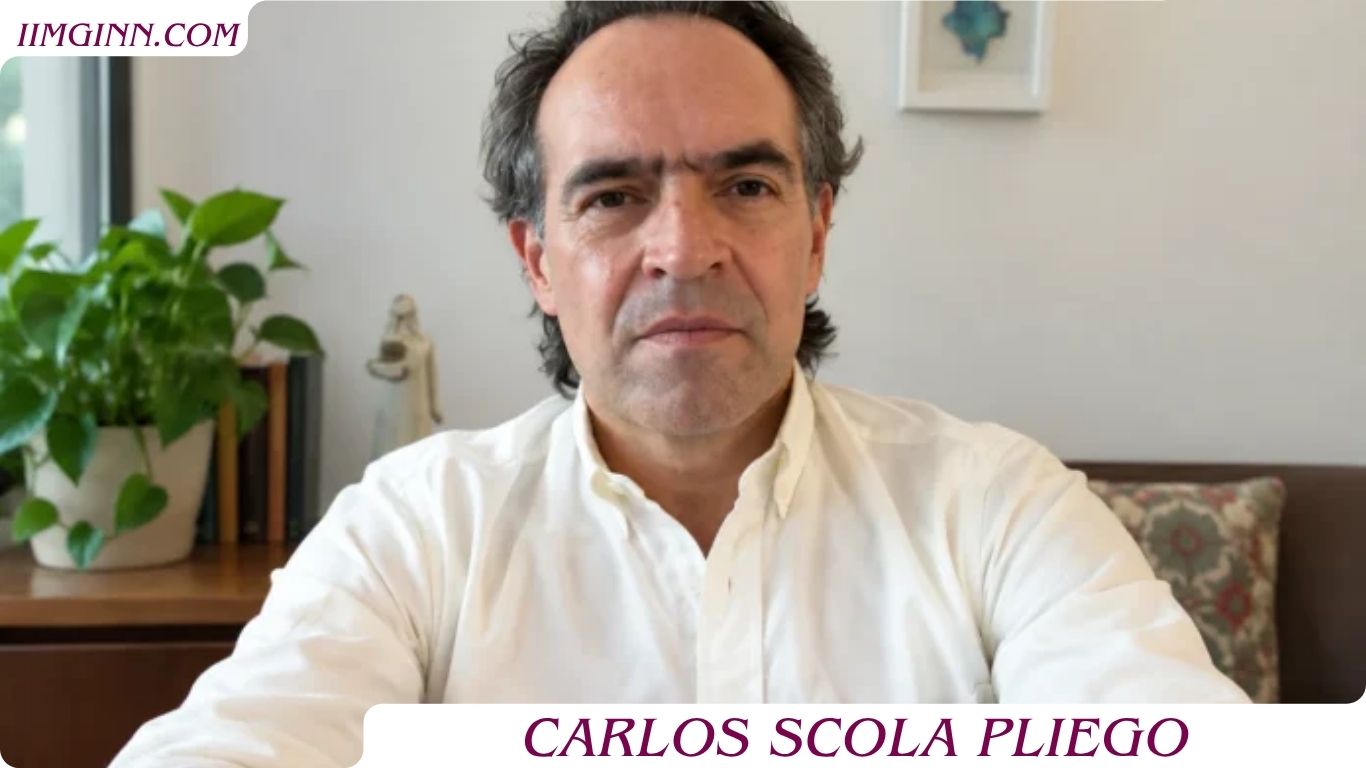
Carlos Scola Pliego: Biography, Career, Marriage to Sade Adu
Carlos Scola Pliego is a Spanish filmmaker whose name remains closely connected with both European cinema and the personal history of singer Sade Adu. Although he has never been a major celebrity in the traditional sense, interest in his life continues because he worked in film, directed documentary projects, and was married to one of the most recognized singers of the 1980s and 1990s.
Unlike Sade, who has maintained a successful international music career, Carlos Scola Pliego has generally stayed away from public attention. This makes his biography harder to reconstruct than the biographies of many other celebrity spouses. Some information is well documented, while other claims repeated online are difficult to verify.
Available film records identify Carlos Scola, also listed as Carlos Scola Pliego, as a filmmaker who worked in several behind-the-scenes positions, including assistant director, director, writer, and producer. His credits include Spanish and international productions, as well as documentary work such as Ngira: Gorilas en la montaña and Donde termina el corazón.
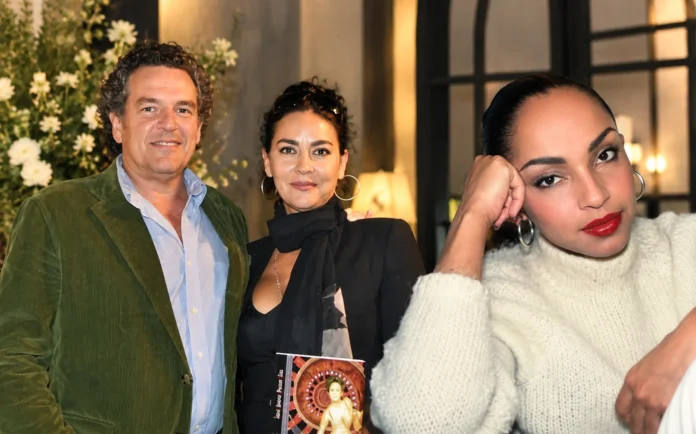
His marriage to Sade Adu is also well established. Sade’s official biography states that she married Spanish film director Carlos Scola Pliego in 1989. Spanish newspaper EL PAÍS adds that the marriage took place in October 1989 after the couple had developed a relationship in Madrid.
This article looks at Carlos Scola Pliego’s life, career, relationship with Sade Adu, divorce, filmography, privacy, and the limits of what can responsibly be said about him.
Who Is Carlos Scola Pliego?
Carlos Scola Pliego is a Spanish filmmaker and film-production professional. He is best known today for two reasons: his work in cinema and his former marriage to British-Nigerian singer Sade Adu.
His professional record shows that he did much more than simply appear in the entertainment industry through his relationship with a famous musician. He worked behind the camera in several production roles before moving into directing and writing.
IMDb lists Carlos Scola as being associated with projects including Ngira: Gorilas en la montaña, Donde termina el corazón, and Goal II: Living the Dream. The same database lists a range of assistant-director and directing credits and identifies Carlos Scola Pliego as an alternate name.
One important point is that Carlos has never had the same level of public exposure as Sade. There are relatively few reliable interviews, biographies, or detailed personal profiles about him.
That means a responsible biography should separate documented facts from claims that have simply been repeated by websites.
For example, his profession, marriage to Sade, several film credits, and divorce year have reasonable documentation. His exact date of birth, current residence, personal finances, and detailed family background are much less certain.
This distinction is important when researching a private person connected to a famous celebrity.
Carlos Scola Pliego Early Life and Background
There is limited reliable public information about Carlos Scola Pliego’s early life.
Some sources describe him as being from Madrid, and EL PAÍS identifies him as a Madrileño, or native of Madrid, while discussing his professional connection with Sade during her years in Spain.
However, details such as his exact birth date, childhood, parents, siblings, schooling, and early personal experiences are not consistently documented by strong primary sources.
This is one of the biggest challenges when researching Carlos Scola Pliego.
Also Read:Frehf: A Complete Guide to Its Meaning, Uses, and Digital Framework
Many modern websites publish detailed biographies containing specific personal information, but they do not always identify where those details came from. When several websites repeat the same claim without providing an original interview, official record, or reliable publication, repetition alone does not make the information verified.
For this reason, it is safer to describe Carlos’s early background in broad terms.
He developed his professional career in Spain’s audiovisual industry and became involved in film production before his relationship with Sade became internationally interesting.
His career timeline is especially useful because it shows that Carlos was already working in cinema when he became associated with Sade. His professional identity therefore did not begin with his marriage.
How Did Carlos Scola Pliego Start His Film Career?
Carlos Scola Pliego appears to have developed his career through practical production work.
Film databases list him in assistant-director and other production positions on projects dating back to the early 1980s. His credits include Otelo (Comando negro), Hundra, G’olé!, Scarab, Never Say Never Again, and The Curse of the Pink Panther.
This type of work is important because assistant directors are a major part of film production even when audiences do not know their names.
An assistant director may help organize shooting schedules, coordinate departments, communicate with production teams, and help keep a film set operating efficiently. The exact responsibilities can vary depending on the size and structure of a production.
Carlos’s career is therefore an example of how a filmmaker can build experience without becoming a recognizable on-screen personality.
His early credits also show that he worked on both Spanish productions and international projects filmed partly in Spain.
This experience eventually appears to have helped him move toward documentary filmmaking and more independent creative work.
Did Carlos Scola Pliego Work on Never Say Never Again?
Yes. Carlos Scola Pliego is associated with the 1983 James Bond film Never Say Never Again.
IMDb lists Carlos Scola as a second assistant director for the Spanish portion of the production, although the role was uncredited.
This detail is worth explaining carefully.
Carlos was not the director of Never Say Never Again, nor was he one of the film’s principal creative figures. His involvement was part of the production team working on the Spanish side of the project.
The movie starred Sean Connery as James Bond, with Kim Basinger and Barbara Carrera among its major cast members. Carlos’s role illustrates the type of international film-production environment in which he gained experience.
The same period also connects him with The Curse of the Pink Panther. IMDb lists him among the assistant-director personnel associated with the project.
For someone researching Carlos Scola Pliego’s film career, these credits are more useful than exaggerated descriptions that portray him as a major Hollywood filmmaker.
They demonstrate that he worked within professional international productions while developing his own career behind the camera.
What Movies Did Carlos Scola Pliego Work On?
Carlos Scola Pliego’s documented screen credits cover several different types of production work.
Among the projects associated with his professional record are:
- Dos y dos, cinco (1981)
- Otelo (Comando negro) (1982)
- Hundra (1983)
- G’olé! (1983)
- Scarab (1983)
- Never Say Never Again (1983)
- The Curse of the Pink Panther (1983)
- Eleni (1985)
- Christopher Columbus (1985)
- Ngira: Gorilas en la montaña (1988)
- Donde termina el corazón (1989)
- Goal II: Living the Dream (2007)
The precise job differed from one production to another. Some records identify him as an assistant director, while later credits identify directing and writing work.
His career therefore should not be reduced to one job title.
He worked across different areas of filmmaking, moving from production assistance toward documentary direction and writing.
Carlos Scola Pliego as a Documentary Filmmaker
The most distinctive part of Carlos Scola Pliego’s career may be his documentary work.
IMDb lists him as a director and writer of Ngira: Gorilas en la montaña, a 1988 documentary short. It also credits him as director and writer of Donde termina el corazón, released in 1989.
These projects are particularly important because they show Carlos working as a creator rather than simply supporting another director.
Ngira: Gorilas en la montaña focused on gorillas and was connected with filming in the Democratic Republic of Congo. Later accounts of Donde termina el corazón describe the project as a broader documentary exploration of Africa.
The subjects suggest an interest in real-world locations, wildlife, people, and cultures.
That is a different type of filmmaking from commercial entertainment. Documentary filmmaking often depends on observation, location work, research, patience, and an ability to present real people and environments respectfully.
Carlos’s documentary credits therefore provide useful evidence of his creative interests without requiring speculation about his personality.
What Is Ngira: Gorilas en la montaña?
Ngira: Gorilas en la montaña is a documentary short associated with Carlos Scola Pliego in 1988.
IMDb lists him as director, writer, and producer for the project, while other film-related sources describe it as a documentary filmed in the Congo.
The project is significant because it demonstrates that Carlos was not only working as an assistant director. He was also developing his own documentary projects.
The subject of mountain gorillas placed the production in a challenging natural environment and connected his work with wildlife and African landscapes.
It also helps explain why describing Carlos simply as “Sade Adu’s ex-husband” gives an incomplete picture.
His professional history existed independently of his relationship with the singer.
Also Read:MMSBRE: Understanding Business Efficiency and Digital Growth
For researchers interested in Spanish documentary filmmaking from the late 1980s, Ngira is one of the more relevant titles associated with his name.
What Is Donde termina el corazón?
Donde termina el corazón is another documentary project associated with Carlos Scola Pliego.
IMDb lists Carlos as director and writer of the 1989 production.
The project continued the interest in African subjects visible in his earlier documentary work. Available descriptions connect it with different African locations and cultural experiences.
Its importance in Carlos’s career comes from the fact that it represents a move toward more personal filmmaking.
Rather than simply helping another director organize a production, Carlos was now credited with creating and shaping his own documentary.
The project also appeared during an important period in his personal life. Carlos married Sade Adu in 1989, the same year associated with Donde termina el corazón.
That overlap is interesting historically, but it should not be used to make unsupported claims about whether the film was influenced by his marriage or personal experiences.
There is not enough reliable evidence to establish such a connection.
How Did Carlos Scola Pliego Meet Sade Adu?
Carlos Scola Pliego and Sade Adu became connected through the film and music production environment in Spain.
According to EL PAÍS, Carlos was working as an assistant director when Sade was involved with filming music videos in Spain. The newspaper explains that Sade later moved to Madrid during a difficult period in her life, and she and Carlos developed a romantic relationship there.
This professional connection is important because it shows that they did not simply meet as a celebrity and an unknown admirer.
Their worlds already overlapped through audiovisual production.
Sade was becoming an international music star, while Carlos was working in the Spanish film industry.
Their relationship developed during a period when Sade was dealing with the pressures of international fame and touring. Her official biography also describes her long-standing discomfort with intrusive media attention and explains that she often placed her personal life ahead of constant publicity.
This helps explain why so little detailed information exists about their private relationship.
When Did Carlos Scola Pliego Marry Sade Adu?
Carlos Scola Pliego married Sade Adu in 1989.
Sade’s official biography confirms the marriage and identifies Carlos as a Spanish film director.
EL PAÍS reports that the wedding took place in October 1989 and describes contemporary reporting as saying that the ceremony occurred in a Spanish castle.
There are conflicting claims online about the exact wedding date and location.
Some websites publish a specific day, while professional databases may show a different date. Because these details are not consistently supported by primary records, it is better to use the well-supported year of 1989 and avoid presenting an uncertain exact date as established fact.
This is an important example of responsible celebrity biography writing.
A good article should not turn an uncertain detail into a fact simply because many websites repeat it.
What Was Carlos Scola Pliego and Sade Adu’s Marriage Like?
The public record suggests that the marriage was relatively private.
Sade had already become internationally famous, while Carlos worked largely behind the scenes. Their relationship therefore brought together two very different levels of public attention.
Sade’s official biography explains that her personal life was important to her and that her marriage to Carlos was part of a period when she was making significant changes in her life.
Spanish reporting also describes their years in Madrid as a quieter period for Sade.
The couple’s private life should not be reconstructed through rumors or unsupported stories. There is not enough reliable evidence to describe their daily relationship in detail.
What can be established is that they married in 1989 and that their marriage later ended in divorce.
Their relationship remains historically interesting because it connected a globally successful singer with a Spanish filmmaker during an important period in both of their careers.
When Did Carlos Scola Pliego and Sade Adu Divorce?
Carlos Scola Pliego and Sade Adu divorced in 1995.
IMDb’s biographical information lists Sade as Carlos’s former spouse and gives the marriage period as 1989 to 1995.
The relationship appears to have ended before the formal divorce was completed, according to various secondary accounts. However, the exact timeline of their private separation is not documented as clearly as the legal end of the marriage.
The most reliable approach is therefore to state that they married in 1989 and were divorced by 1995.
Claims about the precise cause of the breakup should be treated carefully.
There are many online stories that attempt to explain why the marriage ended, but a detailed, authoritative account from both people is not readily available.
Why Did Carlos Scola Pliego and Sade Adu Divorce?
The exact reason for the divorce is not firmly established in reliable public sources.
This is one of the areas where internet biographies often become more confident than the available evidence allows.
A number of articles claim to know exactly what caused the relationship to end. However, those claims are frequently repeated without a primary source such as a direct interview, court record, or contemporary reporting.
It is therefore more accurate to say that the marriage ended in divorce in 1995 and that the detailed reasons remain private.
This approach also respects the fact that both Carlos and Sade have generally maintained a strong boundary around their personal lives.
Sade’s official biography specifically discusses her discomfort with intrusive media attention.
For modern readers, this is an important lesson in digital literacy: a large number of websites repeating a personal claim does not necessarily mean that claim has been independently verified.
Did Carlos Scola Pliego and Sade Adu Have Children?
There are no publicly documented children from the marriage between Carlos Scola Pliego and Sade Adu.
Also Read:Nahttypen: Complete Guide to Seam Types in Sewing
Sade later became a parent to Izaak Theo Adu, who was born in 1996, after her marriage to Carlos had ended. The official Sade biography places her child’s birth in the period following the marriage.
This distinction matters because some low-quality websites have published incorrect family information about Carlos and Sade.
There is no strong evidence that Carlos and Sade had children together.
There is also limited reliable public information about Carlos’s later family life. The absence of public information should not be interpreted as proof that he had no later relationships. It simply means that such information has not been reliably documented.
What Happened to Carlos Scola Pliego After the Divorce?
Carlos Scola Pliego largely remained outside celebrity culture after his divorce from Sade.
His available professional record shows that he continued to have connections with filmmaking. IMDb lists a later association with Goal II: Living the Dream, a 2007 football drama, in an additional crew role.
However, there is no reliable evidence that he maintained the kind of highly visible public career associated with major Hollywood directors.
This relative disappearance from entertainment news may partly explain why searches for his name often produce conflicting information.
When a person stops giving interviews and avoids public events, later websites sometimes attempt to fill information gaps with speculation.
That does not make those claims reliable.
The most responsible description of Carlos’s later life is therefore simple: he remained a private figure, while his older film credits and marriage to Sade continued to generate public curiosity.
Where Is Carlos Scola Pliego Today?
Carlos Scola Pliego’s current location and private circumstances are not reliably documented.
There is no strong public source that establishes his current home, day-to-day activities, current relationship status, or precise professional role.
This is an important distinction between public information and private information.
A person’s former marriage to a famous musician does not mean that every detail of their current life should be publicly reconstructed.
For SEO readers searching “where is Carlos Scola Pliego now,” the most accurate answer is that his present circumstances are largely outside the reliable public record.
Claims about his current residence, wealth, relationships, or lifestyle should therefore be treated with caution unless supported by a trustworthy and recent source.
What Is Carlos Scola Pliego’s Net Worth?
There is no reliably verified public figure for Carlos Scola Pliego’s net worth.
Some websites publish large estimates, but these figures generally do not provide financial documents or authoritative evidence to support them.
A film professional’s credits cannot be used to calculate an accurate personal fortune.
Likewise, being married to a successful recording artist does not establish an individual’s personal net worth.
For this reason, readers should be cautious with pages claiming that Carlos is worth a specific number of millions of dollars.
A more trustworthy answer is simply that his net worth is not publicly verified.
This is another example of why E-E-A-T matters when researching celebrity-adjacent biographies. Accurate content should distinguish documented information from estimates created mainly for search traffic.
Why Is Carlos Scola Pliego Still Famous Today?
Carlos Scola Pliego remains a subject of interest because his story connects two different entertainment worlds: Spanish cinema and international popular music.
For film enthusiasts, his career is interesting because he worked on several international productions and later directed documentary projects.
For Sade fans, he is important because he was her husband during a significant period of her life.
For search users, his name is especially interesting because relatively little personal information is available.
That combination creates a natural mystery.
However, the lack of information should not become an excuse to invent details.
The strongest parts of Carlos Scola Pliego’s story are already interesting enough: a Spanish filmmaker, an international production career, documentary projects about Africa, and a marriage to one of the world’s most private and successful singers.
Carlos Scola Pliego and Sade Adu: Separating Facts From Online Claims
Search results about Carlos Scola Pliego contain a mixture of reliable information, repeated claims, and speculation.
The following distinction is useful:
| Topic | What can reasonably be established |
| Profession | Spanish filmmaker and film-production professional |
| Marriage | Married Sade Adu in 1989 |
| Divorce | Marriage ended in divorce in 1995 |
| Film career | Worked as assistant director and in other production roles |
| Documentary work | Directed/wrote projects including Ngira and Donde termina el corazón |
| Never Say Never Again | Associated with Spanish production work as a second assistant director |
| Children with Sade | No publicly documented children together |
| Current location | Not reliably established |
| Current net worth | Not reliably established |
| Exact private life today | Not reliably documented |
This approach provides a clearer picture than simply repeating everything found on celebrity biography websites.
It also protects readers from common online problems such as fake net-worth figures, invented family histories, incorrect dates, and unsupported claims about relationships.
Why Carlos Scola Pliego’s Privacy Matters
Carlos Scola Pliego’s story is also a useful example of the changing relationship between celebrities, search engines, and privacy.
People often assume that information about a famous person’s former spouse is automatically public information.
That is not true.
Marriage records and professional credits may be matters of public record, but private addresses, personal phone numbers, current relationships, financial accounts, and other sensitive information should not be treated as ordinary biography material.
The same principle applies to old photographs and social media profiles.
A search result does not automatically prove that a profile belongs to the person being researched.
This is particularly important with people who have relatively common names or limited official online presence.
Readers should verify information through reputable publications, professional databases, official biographies, and original interviews whenever possible.
What Can We Learn From Carlos Scola Pliego’s Career?
Carlos Scola Pliego’s career offers an interesting example of how filmmaking careers develop behind the scenes.
His work did not begin with a famous directing job.
Also Read:Wenrath: Discover Wehnrath in Reichshof, Germany
Instead, his professional record shows experience across production roles before he became associated with directing and writing.
This is common in the film industry.
Many successful filmmakers spend years learning how productions operate before becoming directors themselves.
Assistant-director work can teach valuable practical skills, including scheduling, coordination, communication, location management, and teamwork.
Carlos’s transition into documentary filmmaking also demonstrates another important part of cinema: not every filmmaker is interested in mainstream entertainment.
His documented documentary projects focused on Africa and wildlife, suggesting an interest in real-world subjects and locations.
That makes his career more diverse than the simple label of “Sade Adu’s ex-husband” suggests.
Frequently Asked Questions About Carlos Scola Pliego
Is Carlos Scola Pliego a real filmmaker?
Yes. Film databases identify Carlos Scola, also known as Carlos Scola Pliego, as a Spanish film professional who worked as an assistant director, director, writer, producer, and in other production roles. His credits include several productions from the 1980s and later work connected with Goal II: Living the Dream.
Was Carlos Scola Pliego involved in music video production?
Carlos was involved in audiovisual production connected with Sade’s work in Spain. EL PAÍS reports that he worked as an assistant director on three of Sade’s music videos and that their relationship developed during her time in Madrid.
Did Carlos Scola Pliego direct documentaries outside Spain?
His best-known directing credits include documentary projects connected with Africa, particularly Ngira: Gorilas en la montaña and Donde termina el corazón. These works indicate that his filmmaking interests extended beyond conventional Spanish commercial cinema.
Is Carlos Scola Pliego active on social media?
There is no widely established official social-media presence that can confidently be identified as belonging to Carlos Scola Pliego. Because he has maintained a private profile, readers should be careful with accounts using his name or photographs without independent verification.
Why are there so many conflicting biographies about Carlos Scola Pliego?
The main reason is the limited amount of primary information about his private life. Some websites fill gaps with estimates or repeat information from other websites without checking the original source. Reliable research should prioritize official biographies, established publications, and professional film databases over unsourced celebrity profiles.
Conclusion
Carlos Scola Pliego is much more than a name connected to Sade Adu.
He was a Spanish filmmaker who developed professional experience through assistant-director and other behind-the-scenes roles before moving into directing and documentary filmmaking. His documented credits include international productions such as Never Say Never Again, The Curse of the Pink Panther, Eleni, and Christopher Columbus, as well as his own documentary projects Ngira: Gorilas en la montaña and Donde termina el corazón.
His marriage to Sade Adu in 1989 remains the part of his biography that attracts the most public interest. Sade’s official biography confirms the marriage, while EL PAÍS provides additional context about their relationship and years in Madrid.
The marriage ended in divorce in 1995, but many details about the relationship remain private. There is no strong reason to turn uncertain claims about their breakup, Carlos’s later relationships, finances, or current location into established facts.
The most useful way to understand Carlos Scola Pliego is therefore to look at the evidence that does exist. He was a Spanish film professional, a documentary filmmaker, and a person who briefly shared an important chapter of his life with one of the most recognizable singers in modern music.
His story also demonstrates an important lesson for online research: when a public figure is highly private, the absence of information is not an invitation to invent it. Good biography writing should value accuracy, source quality, privacy, and clear separation between verified facts and speculation.