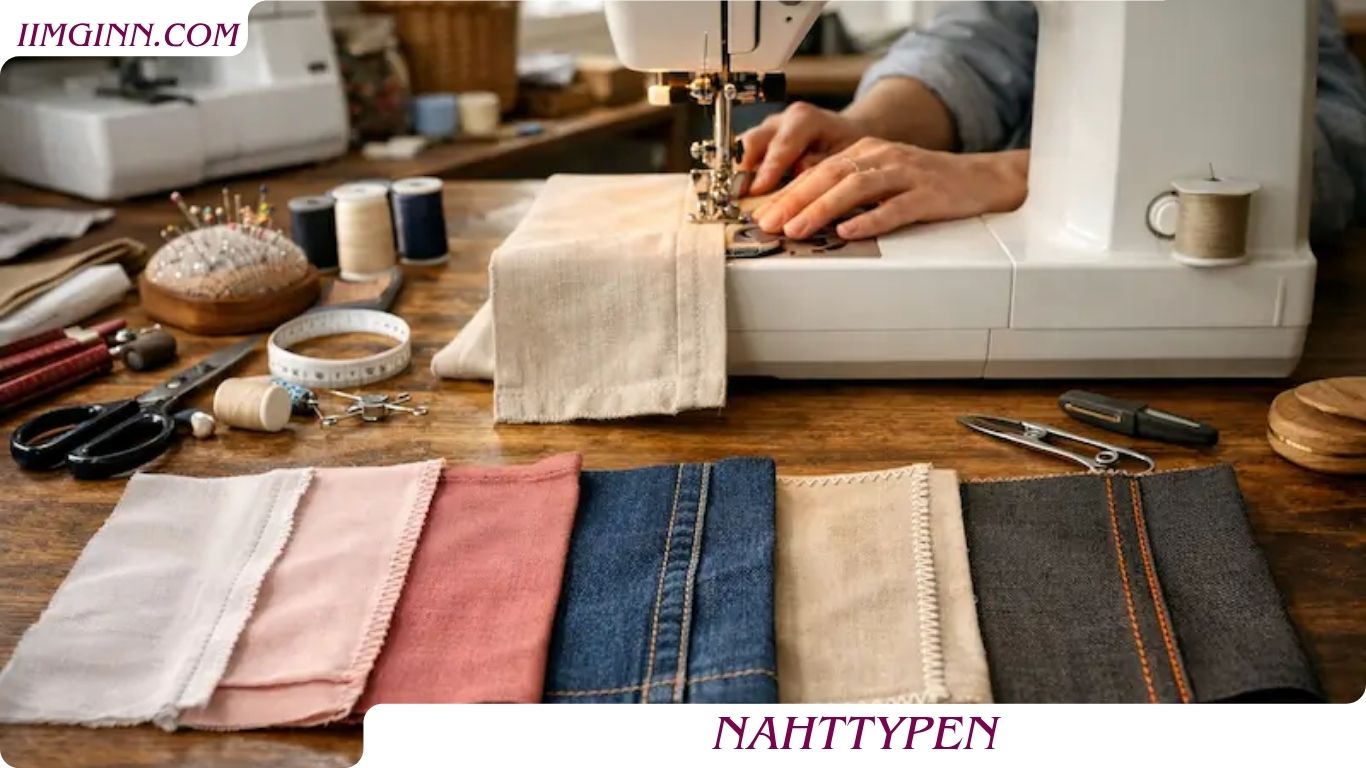
Nahttypen: Complete Guide to Seam Types in Sewing
Nahttypen is a German term for “seam types.” It refers to the different ways fabric pieces or layers are joined during sewing and textile production. The right seam can affect a garment’s strength, comfort, flexibility, appearance, and durability.
Different fabrics may require different seam constructions. Lightweight fabrics often need neat, low-bulk seams, while denim and workwear may need stronger options. Stretch fabrics also require seams that can move with the material.
This guide covers common nahttypen, their uses, fabric suitability, and the difference between seam types and stitch types.
What Does Nahttypen Mean?
Nahttypen simply means “seam types” in German. In sewing, it refers to the various constructions used to join fabric pieces, including plain, French, flat-felled, lapped, bound, and overlocked seams.
The exact terminology can vary between sewing and textile contexts, so understanding the purpose of each seam is more useful than memorizing names alone.
Why Are Nahttypen Important in Sewing?
Nahttypen are important because seam construction can directly affect how a finished textile product performs.
A seam may influence:
- Strength
- Durability
- Flexibility
- Comfort
- Appearance
- Fabric stability
- Edge protection
- Bulk
- Stretch
- Production speed
For example, a garment that will be worn during physical work may need seams that can handle repeated pulling and movement. A delicate blouse may need a neat interior seam with little bulk.
Sportswear creates another challenge because the fabric and seams often need to stretch together. A seam that works well on a woven cotton shirt may not be suitable for a highly elastic knit fabric.
Seam selection is therefore a combination of design and engineering.
Also Read: Wenrath: Discover Wehnrath in Reichshof, Germany
The best seam is not always the strongest possible seam. It is the seam that provides the right balance of performance, appearance, comfort, and manufacturing efficiency for the intended product.
What Is the Difference Between a Seam and a Stitch?
Seam and stitch are closely related terms, but they do not mean exactly the same thing.
A stitch refers to the formation made by thread as it passes through or around the material. A seam refers to the construction used to join material components.
A simple way to remember the difference is:
A stitch describes how the thread is formed.
A seam describes how the fabric pieces are joined.
For example, a plain seam can be sewn using a particular stitch formation. An overlocked seam uses an overedge-style stitch construction to join and/or finish fabric edges.
This distinction becomes especially important in industrial sewing.
ISO 4915 is concerned with stitch types, while ISO 4916 deals with seam types and their classification. Understanding both terms makes technical sewing instructions much easier to follow.
What Are the Main Types of Nahttypen?
There are many different seam constructions, but several are especially common in clothing and textile production.
The main seam types include:
Plain seam
Two fabric pieces are joined along a seam line, usually with their intended faces together before sewing.
French seam
The raw fabric edges are enclosed inside the finished seam. This creates a clean interior appearance.
Flat-felled seam
The seam allowance is folded and enclosed, producing a strong and neat construction.
Lapped seam
One piece of fabric overlaps another and is stitched through the overlapping layers.
Bound seam
A strip of fabric or binding material covers the raw edge or seam allowance.
Welt seam
A folded or additional section of material creates a raised or defined seam appearance.
Overlocked seam
An overlock machine joins and/or finishes fabric edges using multiple threads.
Butt seam
Two material edges are positioned together rather than being joined through a conventional overlapping arrangement.
Each construction has a different purpose. Fabric type, garment design, stress level, comfort, and production requirements should all be considered before selecting one.
What Is a Plain Seam?
A plain seam is one of the simplest and most widely used seam types.
Two pieces of fabric are placed together and stitched along a specified seam line. The seam allowance is then pressed or finished according to the requirements of the garment.
Plain seams are common in:
- Shirts
- Dresses
- Skirts
- Pants
- Jackets
- Home textiles
- Bags
- General sewing projects
One reason plain seams are so popular is their simplicity. They are relatively easy to sew and can be adapted to many different fabrics.
However, the raw edges may need additional finishing if the fabric is likely to fray.
Possible finishing methods include overlocking, zigzag stitching, binding, or enclosing the edges.
For beginners, the plain seam is often the best construction to learn first because it provides a foundation for understanding more advanced seam types.
What Is a French Seam?
A French seam is designed to enclose the raw fabric edges inside the seam.
Instead of leaving the cut edges exposed, the construction folds them inward. This produces a clean and finished appearance on the inside of the garment.
French seams are especially useful for lightweight woven fabrics.
They are commonly associated with:
- Lightweight blouses
- Dresses
- Fine shirts
- Delicate woven fabrics
- Some children’s clothing
- Home sewing projects
One major advantage is that the raw edges are protected from direct exposure.
Another benefit is appearance. The inside of the garment can look neat and professional without a separately visible raw edge.
The main limitation is additional bulk. A French seam may not be ideal for thick fabrics because several layers can accumulate inside the construction.
It also requires more sewing steps than a basic plain seam.
What Is a Flat-Felled Seam?
A flat-felled seam is a durable seam construction in which the seam allowance is folded and enclosed.
This creates a strong finished seam with the raw edges hidden inside.
Flat-felled seams are commonly associated with durable garments such as:
- Jeans
- Work shirts
- Workwear
- Utility clothing
- Outdoor garments
One important benefit is protection of the raw edges. The enclosed construction can also provide good durability when the seam is correctly produced.
Flat-felled seams often include visible stitching, which can become part of the garment’s design.
The main disadvantage is that this construction generally requires more steps than a simple plain seam.
It can also create additional thickness, especially when used with heavy fabrics.
For this reason, it is most useful when durability and a clean finished appearance are important.
What Are Lapped, Bound, and Welt Seams?
Lapped, bound, and welt seams are useful constructions that solve different sewing problems.
A lapped seam is created when one piece of fabric overlaps another. Stitching then holds the layers together.
This type of construction can be useful when a durable or visually defined connection is needed.
A bound seam uses an additional strip of fabric or binding to cover a raw edge or seam allowance. Binding can create a clean appearance and help control fraying.
Bound constructions are often useful for:
Also Read:Bddiabetes.com: History, Diabetes Care Resources, and BD’s Transition
- Necklines
- Armholes
- Jackets
- Bags
- Quilting
- Garment interiors
A welt seam uses a folded or additional section of material to create a defined seam structure. The exact construction can vary depending on the pattern or technical specification.
These three seam types demonstrate why seam selection should be based on the intended result rather than simply choosing the most familiar method.
What Is an Overlocked or Serged Seam?
An overlocked seam is produced with an overlock machine, which is commonly called a serger in the United States.
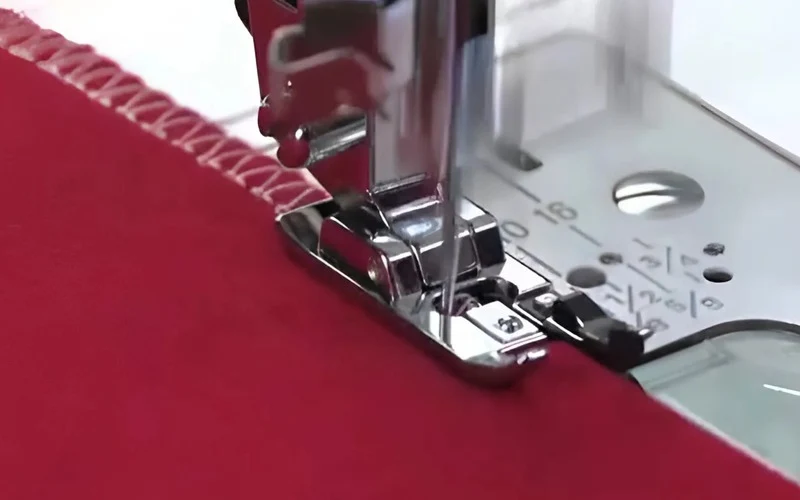
An overlock machine uses multiple threads and can stitch around the fabric edge. Depending on the machine and setup, it can join fabric pieces while also finishing the raw edges.
Overlocking is widely used for:
- Knitwear
- T-shirts
- Casual clothing
- Sportswear
- Stretch garments
- Mass-produced apparel
One major advantage is efficiency. An overlock machine can complete edge finishing quickly while creating a professional-looking result.
Overlock construction is especially useful for fabrics that tend to fray.
However, machine settings must match the material. Incorrect tension, feeding, needle selection, or stitch settings can produce problems such as puckering, stretched edges, uneven seams, or thread breakage.
For this reason, testing on a fabric sample is recommended before sewing the final garment.
How Do You Choose the Right Nahttypen for Different Fabrics?
The correct seam depends heavily on the fabric.
Lightweight fabrics often benefit from seams that create little bulk. A French seam may be useful when a clean interior is desired.
Medium-weight woven fabrics can often use plain seams with appropriate edge finishing.
Heavy fabrics may require durable constructions such as flat-felled or reinforced seams.
Stretch fabrics require special care because the seam must move with the material.
When choosing a seam, consider:
- Fabric weight
- Fabric structure
- Stretch level
- Fraying tendency
- Garment design
- Expected stress
- Comfort
- Appearance
- Washing requirements
For example, using a heavy and bulky seam on a lightweight fabric may distort the garment.
Likewise, using a rigid seam on a highly stretchy fabric can restrict movement or cause stitching failure.
The best approach is to test the seam on a sample of the actual fabric before production.
How Are Nahttypen Used in Industrial Textile Manufacturing?
In industrial garment production, seam selection is part of a larger manufacturing process.
Factories must consider more than simply whether a seam looks attractive.
They may evaluate:
- Production speed
- Machine capability
- Labor requirements
- Thread consumption
- Fabric behavior
- Quality standards
- Garment specifications
- Durability
- Production cost
- Repeatability
Different operations may require specialized sewing machines.
For example, one machine may be used to join garment panels while another may be used for edge finishing or decorative stitching.
Standard terminology is valuable because a designer, production manager, technician, and quality inspector need to understand the same construction requirements.
International standards such as ISO 4916 help provide a common technical language for seam classification and terminology.
This is particularly useful when textile products are produced across different countries and manufacturing facilities.
How Can Beginners Learn and Practice Different Nahttypen?
The easiest way to learn seam types is to practice them using small fabric samples.
Instead of starting with a complicated garment, create a sample collection.
Start with a plain seam and then compare it with a French seam, flat-felled seam, bound seam, and overlocked seam.
For each sample, record:
- Fabric type
- Thread type
- Needle type
- Stitch type
- Seam type
- Seam allowance
- Machine settings
- Final result
Look at both sides of every sample.
Check whether the seam is flat, even, strong, flexible, and comfortable.
Try the same seam on different fabrics to see how the result changes.
This method teaches an important lesson: a seam that works perfectly on one fabric may not perform the same way on another.
Beginners should also learn basic pressing techniques because pressing can significantly affect the final appearance of a seam.
Also Read:Mabinogi Lazy Patch: Complete Guide to Faster Game Updates
Frequently Asked Questions About Nahttypen
What is the easiest seam type for a beginner to learn?
A plain seam is usually one of the easiest constructions for beginners because the basic process is simple and it is used in many sewing projects.
Which nahttypen is best for lightweight fabric?
The best choice depends on the fabric and garment design, but French seams can be useful for lightweight woven fabrics when a clean interior finish and enclosed raw edges are desired.
Are flat-felled seams stronger than plain seams?
A properly constructed flat-felled seam can provide excellent durability because the raw edges are enclosed and the construction can include additional stitching. However, actual strength depends on fabric, thread, stitching, and construction quality.
Can the same seam type be used for every fabric?
No. Fabric weight, stretch, fraying behavior, thickness, and intended use all affect seam selection. A suitable seam for denim may not be suitable for lightweight silk or stretch knit fabric.
Why is learning nahttypen useful outside professional sewing?
Understanding seam types can help people evaluate clothing quality, choose appropriate sewing methods, repair garments, understand textile terminology, and communicate more clearly with designers or manufacturers.
Conclusion
Nahttypen is the German term for seam types and is an important concept in sewing, fashion design, apparel manufacturing, and textile construction.
Different seam constructions serve different purposes. Plain seams offer a simple and versatile solution, French seams provide enclosed edges and a neat interior, flat-felled seams offer durable construction, while lapped, bound, welt, and overlocked seams provide additional options for different fabrics and design requirements.
The most important lesson is that there is no single best seam for every project. The correct nahttypen depends on the fabric, stress level, garment design, desired appearance, comfort, durability, and manufacturing process.
It is also important to understand that seam types and stitch types are related but different concepts. Professional standards help clarify this terminology and make communication easier within the textile industry.
For beginners, the best way to understand seam types is through hands-on practice with fabric samples. By comparing different constructions, you can quickly see how seam selection changes strength, flexibility, appearance, and comfort.
Whether you are learning sewing, studying fashion, designing clothing, or simply trying to understand how garments are made, learning nahttypen provides a useful foundation for understanding modern textile construction.