ABS Testauslösung: Complete Guide to Testing an Avalanche Airbag
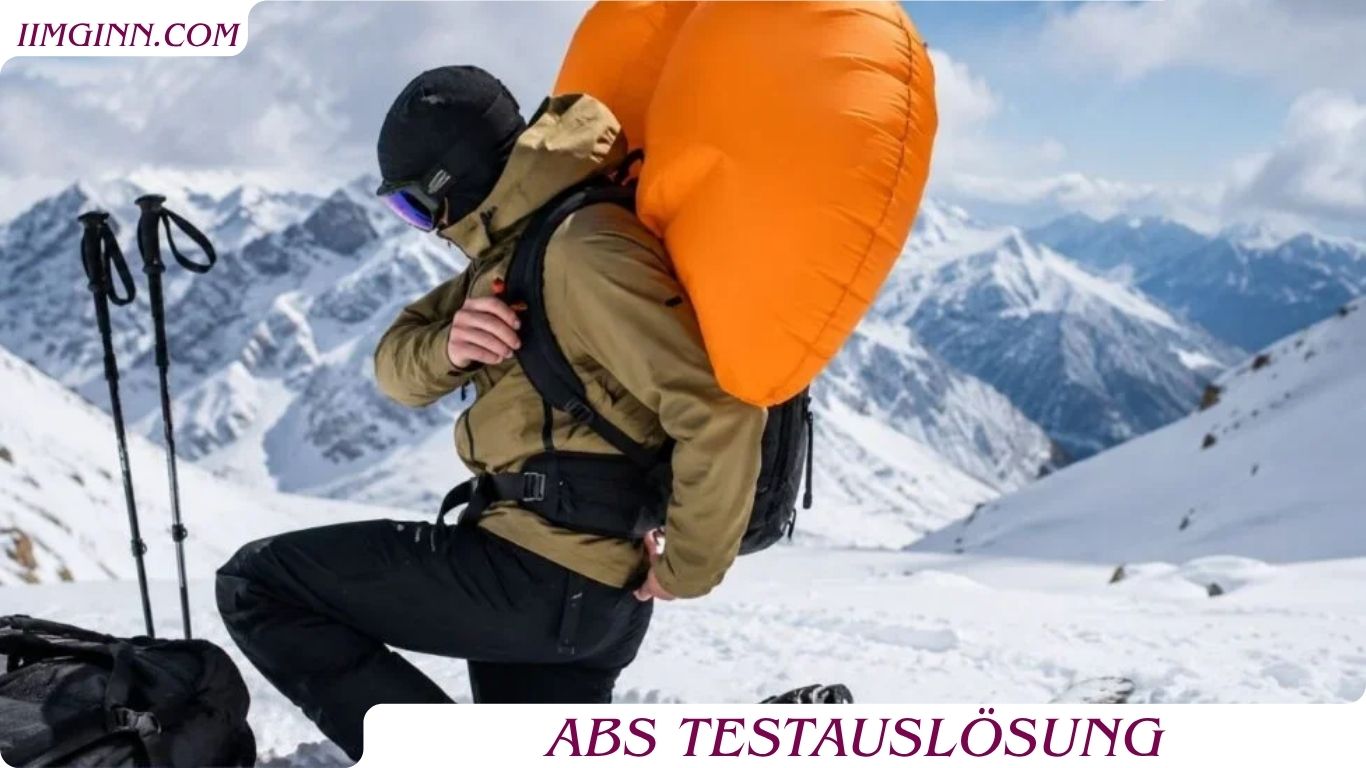
If you have come across the German term “ABS Testauslösung,” you may be wondering what it means and why it matters. In the context of avalanche safety, ABS Testauslösung refers to a controlled test activation of an ABS avalanche airbag system. The purpose is to check the release mechanism and give the user practical experience with pulling the activation handle before entering avalanche terrain.
The term is German. “Testauslösung” can be understood as “test activation” or “test deployment.” Here, ABS refers to ABS avalanche airbag equipment, not a vehicle’s anti-lock braking system.
A test activation is more than a simple equipment check. Avalanche conditions can be stressful, cold, and unpredictable. If a skier or snowboarder has never practiced reaching for and pulling the airbag handle, the movement may not be automatic when an emergency occurs. ABS recommends a training activation before each season, while also recommending periodic professional servicing.
This guide explains what ABS Testauslösung means, how it relates to avalanche airbags, why testing matters, what users should know about cartridges and servicing, and what a test activation cannot guarantee.
What Does ABS Testauslösung Mean?
ABS Testauslösung means a test activation of an ABS avalanche airbag system.
In simple terms, it is a controlled activation performed before an actual avalanche emergency. The goal is to confirm that the system can be triggered and to help the user become familiar with the activation movement.
An avalanche airbag is designed to inflate rapidly when activated. The inflated airbag can increase a person’s effective volume during an avalanche and may improve the chance of remaining closer to the surface. However, it does not prevent avalanches, eliminate avalanche risk, or guarantee survival.
The phrase can be separated into two parts:
- ABS refers to the ABS avalanche airbag system.
- Testauslösung means test activation or test deployment.
This distinction is important because “ABS” is also widely associated with anti-lock braking systems in automobiles. In searches related to skiing, snowboarding, ski touring, or avalanche equipment, however, “ABS Testauslösung” generally relates to an avalanche airbag.
ABS itself recommends practicing an activation before each season. The company explains that this both checks the system and trains the hand movement required to activate it quickly.
How Does an ABS Avalanche Airbag Work?
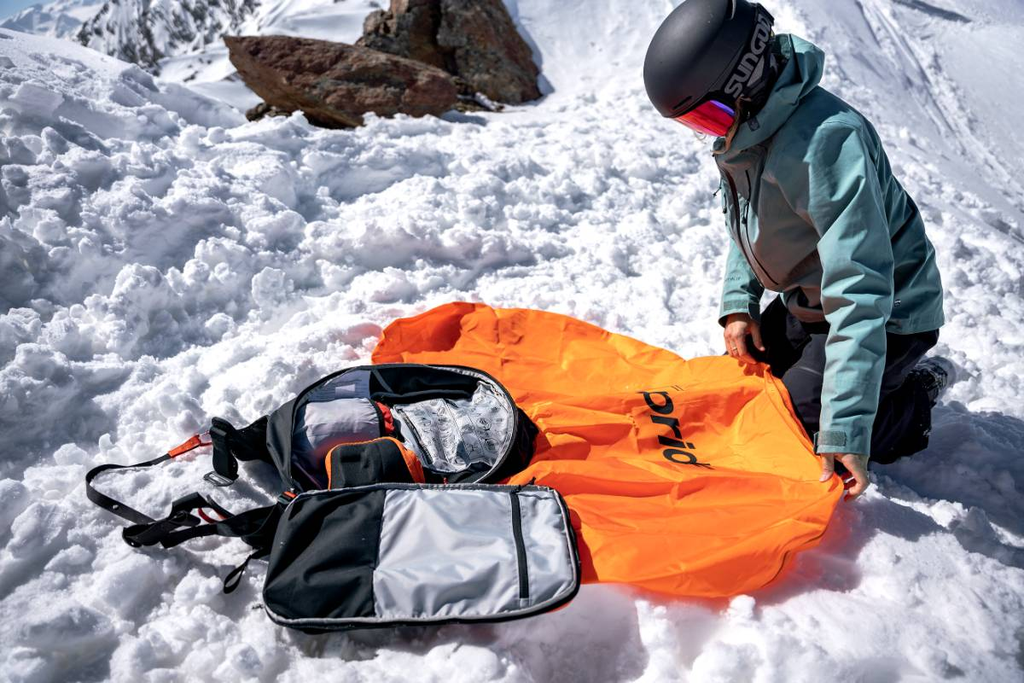
An ABS avalanche airbag is worn as part of a backpack system. It contains an airbag, an inflation system, and an activation mechanism.
When the user activates the system, compressed gas is released into the airbag. The airbag expands and creates a larger volume around the user.
The basic sequence is:
- The user wears the avalanche airbag correctly.
- The system is prepared according to its instructions.
- The activation handle is positioned so it can be reached easily.
- The user pulls the handle when activation is required.
- The inflation system deploys the airbag.
- The user focuses on avalanche survival actions and escaping the moving snow when possible.
Modern ABS products and older ABS systems do not all use exactly the same mechanism. The company has offered different systems over time, including mechanical systems such as EasyTech and systems such as P.RIDE. Therefore, users should always follow the instructions for their specific model rather than assuming that every ABS backpack works in exactly the same way. ABS provides manuals for several of its systems through its official downloads area.
An important point is that an avalanche airbag is only one part of avalanche safety. A complete backcountry setup normally also includes an avalanche transceiver, probe, and shovel, along with appropriate avalanche education and decision-making.
Why Is an ABS Testauslösung Important?
The main benefit of an ABS Testauslösung is preparation.
Also Read: Supermaked: Complete Guide to Modern Grocery Retail
An emergency is not the right time to learn how an activation handle feels. In deep snow, poor visibility, cold temperatures, stress, and fast-moving terrain can make even simple actions harder.
A training activation gives the user an opportunity to learn:
- Where the activation handle is located
- How the handle feels
- How much movement is required
- How the system responds after activation
- How the airbag deploys
- How to reset or service the system afterward
- Whether there are obvious problems with the equipment
ABS specifically says that the activation movement should become reflexive. Its FAQ recommends a training activation with a filled cartridge before each season.
This creates an important difference between “owning an airbag” and “being prepared to use an airbag.”
Someone can have a technically functional backpack but still be poorly prepared if they cannot quickly locate and activate the handle.
When Should You Perform an ABS Testauslösung?
ABS recommends performing a training activation before each season.
This is one of the simplest ways to refresh familiarity with the equipment after months of storage. The manufacturer also recommends regular professional servicing. Its current guidance recommends a general check approximately every three years, while the annual training activation provides an additional user-level check.
A test may also be relevant when:
- You have purchased a new ABS system
- You are using the system for the first time
- You have not used the airbag for a long period
- You want to practice the activation movement
- You have serviced or refilled the system
- You are preparing for a backcountry trip
- You are unsure whether the system is correctly prepared
A test activation should not replace professional inspection after a serious event or when the equipment appears damaged.
ABS recommends a more complete system check after an avalanche deployment and after several seasons of use. Its current service information recommends a complete check after an avalanche incident or approximately every three to five seasons, depending on the number of skiing days.
How to Prepare for an ABS Testauslösung
Preparation matters because an avalanche airbag contains a pressurized inflation system.
Before performing a test activation, read the manual for the exact ABS model you own. Do not rely only on instructions written for another generation of the system.
Check the basic condition of the backpack and its components. Look for obvious damage to the fabric, straps, buckles, airbag compartments, activation components, hoses, and other visible parts.
You should also make sure you understand what happens after activation.
For systems that require a cartridge refill after deployment, a test activation may leave you with a system that is no longer ready for actual avalanche use until it has been properly reset or refilled.
This is why a test should not be performed casually immediately before entering avalanche terrain unless you have enough time to restore the system to operational condition.
ABS states that a training activation using a filled cartridge can be followed by a refill process. The company also provides service options that combine testing, system inspection, and cartridge refilling.
How to Perform an ABS Testauslösung Safely
The exact procedure depends on the ABS system and generation, so the product manual should always be treated as the primary instruction.
For many ABS systems, the general concept is straightforward: prepare the system correctly, make sure the activation handle is accessible, and activate the airbag according to the manufacturer’s instructions.
ABS’s current FAQ describes a training activation using a filled cartridge: install the filled cartridge and pull the activation handle. The company explains that this checks system operation while also practicing the activation movement.
A general preparation sequence can be understood as follows:
- Read the instructions for your specific ABS model.
- Inspect the backpack and airbag components.
- Confirm that the correct inflation system and cartridge are being used.
- Make sure the activation handle is correctly installed and accessible.
- Move to an appropriate location for the test.
- Perform the activation according to the model-specific instructions.
- Observe whether the airbag deploys correctly.
- Deflate and repack the airbag according to the manual.
- Refill or reset the system as required.
- Do not enter avalanche terrain until the system is fully operational again.
This general description is not a substitute for the manual because ABS systems have changed over time.
For example, ABS has described its EasyTech system as a mechanical system that allows a simple test activation and can be reset without tools.
What Happens to the Cartridge After a Test Activation?
The cartridge is an important part of many ABS avalanche airbag systems.
A conventional training activation using a filled cartridge can consume the available gas. That means the cartridge may need to be replaced or refilled before the system is ready for another deployment.
ABS currently offers refill services after test activation. Its service information explains that a used cartridge can be sent for refill or exchanged through the appropriate service process, depending on the system.
This creates an important practical rule:
Do not assume that an airbag is ready simply because it looks normal after a test.
The airbag may be correctly packed while the inflation system is not ready for another deployment.
Some ABS systems have different testing and reset procedures. The manufacturer has specifically described EasyTech as allowing a test activation followed by resetting the system without tools.
Because cartridge technology and ABS systems vary, always check the correct manual and cartridge requirements for your exact model.
What Should You Check After an ABS Testauslösung?
After an activation, the airbag should not simply be folded away without inspection.
The system should be checked according to the manufacturer’s instructions.
Also Read:Carlos Scola Pliego: Biography, Career, Marriage to Sade Adu
Depending on the model, relevant components can include:
- Airbag fabric
- Airbag seams
- Inflation system
- Release mechanism
- Hoses
- Valves
- Cartridge connection
- Activation handle
- Backpack fabric
- Straps and buckles
- Airbag compartment
- Zippers and closures
ABS’s professional Service Large package includes a functional and leak inspection. The manufacturer states that its service checks components such as straps, buckles, airbag compartments, hook-and-loop fasteners, the inflation unit, hoses, cables, and coupling. The airbag itself is also activated during the service to inspect the airbag wings, release valve, inflation system, and material tightness.
This demonstrates an important difference between a simple user training activation and a professional service.
A test activation can help confirm basic operation. It does not necessarily provide the same level of inspection as a complete manufacturer service.
Common Mistakes During an ABS Testauslösung
Several mistakes can reduce the value of a training activation.
The first is performing the test without reading the correct manual.
ABS products have changed over the years, so an instruction found online for an older system may not apply to a newer one.
Another mistake is testing the system but forgetting that the cartridge may no longer be ready afterward.
A third mistake is performing the test shortly before a backcountry trip and assuming there is no additional preparation required.
Other common problems include:
- Incorrect cartridge installation
- Using an incompatible component
- Leaving the activation handle obstructed
- Failing to inspect the backpack
- Packing the airbag incorrectly
- Ignoring signs of damage
- Skipping professional servicing
- Assuming a successful test proves everything is perfect
- Treating an avalanche airbag as a replacement for avalanche training
A successful activation is useful evidence that the system responded during the test. It is not a guarantee that every component will work perfectly in a future avalanche.
That distinction is central to responsible equipment use.
How Often Does an ABS Avalanche Airbag Need Service?
ABS recommends regular professional service in addition to user testing.
Its current FAQ recommends a general check every three years and a training activation before each season.
ABS’s service information also recommends a complete system check after an avalanche deployment or after approximately three to five seasons, depending on usage.
The exact service requirement can depend on:
- The specific ABS model
- Product age
- Number of days used
- Storage conditions
- Previous deployment
- Damage or wear
- Cartridge type
- Manufacturer requirements
ABS also states that, under its recommended maintenance conditions, the ABS system itself can generally be considered for about ten years of use at an average of 50 use days per season, after which the company says it cannot provide service or guarantee safe use.
Cartridge age can also matter. ABS currently notes that some cartridges older than ten years cannot be refilled and may need replacement because of applicable pressure-vessel requirements.
For that reason, users should check the date and specifications on their actual cartridge rather than relying on a general assumption.
What an ABS Testauslösung Cannot Guarantee
An ABS Testauslösung is useful, but it has limits.
A successful test cannot prove that an airbag will always deploy during an avalanche.
There are many factors outside the test environment.
For example, the airbag could be affected by:
- Physical damage
- Incorrect preparation
- Incorrect cartridge installation
- Improper packing
- Equipment wear
- Extremely demanding conditions
- User error
- Obstruction of the activation mechanism
- Failure to activate the system
- A damaged airbag during the avalanche
An avalanche airbag also does not stop an avalanche.
It does not tell the user when terrain is safe. It does not replace avalanche forecasts, terrain assessment, weather awareness, navigation, rescue training, or good decision-making.
ABS’s P.RIDE documentation similarly warns that an avalanche airbag cannot prevent an avalanche and that avalanche terrain remains life-threatening even when safety equipment is used.
The best way to view ABS Testauslösung is therefore as one part of a larger avalanche safety routine.
ABS Testauslösung: Safety Checklist for Beginners
For someone new to avalanche airbags, a simple checklist can make preparation easier.
Before the season:
- Read the manual for your exact ABS model.
- Inspect the complete backpack.
- Check the activation handle.
- Check the cartridge and its date or status.
- Perform the recommended training activation.
- Learn how to reset, refill, or replace the required components.
- Practice reaching for the activation handle.
- Confirm that the system is fully operational before use.
- Check the manufacturer’s recommended service interval.
- Refresh avalanche rescue skills.
Also Read: Frehf: A Complete Guide to Its Meaning, Uses, and Digital Framework
Before each trip:
- Confirm that the airbag is correctly prepared.
- Make sure the activation handle can be reached.
- Check the cartridge or inflation system.
- Inspect visible parts for damage.
- Confirm that the airbag compartment is properly closed.
- Carry the required avalanche rescue equipment.
- Check current avalanche information.
- Make conservative terrain decisions.
The test itself should not become a box-ticking exercise. Its greatest value is combining equipment verification with practical training.
Conclusion: Why ABS Testauslösung Matters for Avalanche Safety
ABS Testauslösung means a test activation of an ABS avalanche airbag system. It is designed to help users confirm basic system operation and, equally importantly, practice the movement needed to activate the airbag during an emergency.
ABS currently recommends a training activation with a filled cartridge before each season. It also recommends periodic professional servicing, with its FAQ describing a general check approximately every three years.
The most important lesson is that an avalanche airbag should be treated as safety equipment, not simply as another piece of ski gear. A test activation can help identify problems and build familiarity, but it cannot guarantee performance in a real avalanche.
Different ABS systems also have different procedures. EasyTech, P.RIDE, SOLID, and other product generations should not automatically be treated as identical. ABS provides product-specific manuals and instructions, making those documents the best source for model-specific preparation and testing.
For responsible backcountry use, the best approach is simple: understand your equipment, practice before the season, maintain the system according to the manufacturer’s guidance, and never let an avalanche airbag replace proper avalanche education and risk assessment.
Frequently Asked Questions About ABS Testauslösung
Is ABS Testauslösung the same as using an ABS airbag in an avalanche?
No. An ABS Testauslösung is a controlled training or equipment test. An actual avalanche deployment happens during an emergency and has much greater safety implications. The test is intended to build familiarity and check the system before it is needed.
Can I perform an ABS test activation without a cartridge?
That depends on the exact ABS model and its testing mechanism. Some systems have specific test or reset procedures, while a standard activation may require a filled cartridge. Do not assume that a cartridge-free procedure is safe for every ABS system. Follow the manual for your model.
Does an ABS test activation damage the airbag?
A correctly performed training activation is intended to be part of normal equipment preparation for applicable ABS systems. However, repeated deployments still place mechanical and material demands on the equipment. Inspect the system afterward and follow ABS’s refill and service requirements.
What should I do if my ABS airbag does not deploy during a test?
Do not rely on the system for avalanche travel until the problem has been understood and corrected. Check the model-specific instructions and contact an authorized ABS service provider if necessary. A failed test should be treated as a reason for further inspection rather than something to ignore.
Is an avalanche airbag enough for backcountry safety?
No. An avalanche airbag is only one part of avalanche safety. Users should also have appropriate avalanche training and carry essential rescue equipment such as an avalanche transceiver, shovel, and probe. Terrain selection, weather awareness, avalanche forecasts, and sound decision-making remain essential.